Showing posts with label Seafood. Show all posts

Friday, 16 October 2020

WHOLE, CITUSY ROASTED TROUT (En Papillotte)

I've made this recipe a few times, either with the fish arranged in a baking dish or sealed up in parchment and aluminium foil parcels. There is something about the parcels which better seals in the flavour and enhances the taste of the fish. If you make the recipe in a baking pan, add a little water or wine to the pan and cover the top while cooking. 


INGREDIENTS:


2 whole trout cleaned by the fishmonger. 

2 Yukon gold potatoes 

2 cubanelle peppers (Italian frying peppers) 

two sprigs of rosemary 

1 orange 

1lemon 

1 lime 

1 onion 

olive oil 

dill leaves 

parsley leaves

2 cloves of garlic, chopped well, divided

freshly ground black pepper 

salt


DIRECTIONS:


·        Preheat the oven to 400° F / 200° C. Wash the fish thoroughly and pat it dry with paper towels.  

·        Prepare parchment paper and aluminium foil sections large enough to accommodate each fish. Spread out both sections of the aluminium foil and top it with the two sections of parchment paper. 

·        Slice the orange, lemon, lime, onion, cubanelles and potatoes into rondelles. 

·        Season the potatoes and cubanelles with salt, pepper, one chopped clove of garlic and two tablespoons of olive oil. Divide into two portions and place one portion onto the centre of each parchment paper. Top with a sprig of rosemary. 

·        In a small bowl mix the rest of the garlic, the dill, parsley, black pepper and just a little salt. 

·      Season the fish with the oil mixture, using it to cover both the cavities and the outside of the fish.   

·        Place the onion and citrus slices into the fish cavities. 

·        Place each fish on top of the potatoes and peppers. 

·        Make two well-sealed parcels by folding the parchment over the fish and then folding the aluminium paper over the parchment. 

·        Place onto a roasting pan and bake in the preheated oven for about 30 minutes. The fish is done when its flesh appears opaque. 

·        You could allow the top of the fish to brown if you so wish. In that case, cook in opened parcels for a further five minutes (or more), depending on personal preference. 

·        Remove the fish from the oven and place it on a serving platter alongside the potatoes and cubanelle peppers. 

·        Drizzle the cooking juices and some olive oil on the top of the trout. Keep warm while allowing the fish to rest for five to ten minutes before serving. Allowing to rest assures that the cooking juices drizzled on top will be absorbed into the flesh of the fish.

Friday, 22 March 2013

PASTA PUTTANESCA with SHRIMP and FETA

I got the idea to make pasta puttanesca with shrimp and feta cheese when I was reading Andrea Camilleri's novel "The shape of water," featuring the character of Inspector Montalbano. I was reading the book for my participation in Cook The Books Club, and I had to think of something nice to make that reminded me of the book. The shrimp, the briny sauce, and the briny feta cheese bring to mind the seaside where inspector Montalbano likes to stroll. 

This is an enjoyable dish and very easy prepare. I love how Greek and Italian ingredients are combined here: strong Mediterranean roots! This dish depends on freshness, therefore, working quickly when preparing it is a must. I had the idea of garnishing the pasta with some fresh grape tomatoes which are very abundant at the market this time of year. They are imported all the way from Mexico and are very tasty. 


Linus happens to love pasta and today he is waiting patiently for his share.
Ingredients:


olive oil
1/2 pound shrimp, peeled and deveined
1/2 pound linguini
2 teaspoons fresh thyme leaves
1 teaspoon dried oregano
2 tablespoons crumbled feta cheese, plus a little more for garnish. 
two or three sun-dried tomatoes, chopped
3 Roma tomatoes cut into chunks (seeds and skin removed)
some grape tomatoes cut in half, to be used for garnish
4 anchovy fillets
2 tablespoons capers, rinsed
1 teaspoon red pepper seeds, or use more if you prefer
4 cloves of garlic, chopped
10 pitted Kalamata olives, sliced in half
¼ cup fresh Italian parsley, chopped

Directions:

  • First, prepare the pasta and shrimp: 
  • Fill a large pot with salted water and bring it to a boil. Add the linguini and cook according to package directions. 
  • Drain the pasta and place it in a large bowl. Sprinkle some olive oil on the pasta, and mix.
  • Meanwhile, in a large skillet heat 3 tablespoons olive oil. 
  • Add 2 cloves of garlic and sauté for one minute. 
  • Add the shrimp and thyme and cook for about 3 minutes, until the shrimp have turned pink. 
  • Remove from the heat, add the feta cheese and season with freshly ground black pepper. 
  • Add the shrimp mixture to the pasta.
  • Add some parsley and mix well. Cover and set aside.
  • Now make the puttanesca sauce:
  • In a pan heat some olive oil and add the rest of the garlic along with the anchovies, red pepper seeds, and capers. Cook for about one minute, stirring. 
  • Add the olives, the oregano, the Roma tomatoes and the sun-dried tomatoes. 
  • Cook for about 10 to 15 minutes.
  • Add the sauce to the pasta and shrimp and mix. 
  • Before serving garnish with the grape tomatoes and the rest of the parsley and feta cheese.

Saturday, 16 March 2013

COOK THE BOOKS: THE SHAPE OF WATER

"The Shape of Water," written by Andrea Camilleri, featuring the dauntless inspector Montalbano. 

We’re going to Cook the Books again, and this time the vehicle we are using is Andrea Camilleri’s novel “The Shape of Water.”  After reading the novel we are making something to eat. Something delicious.  Something inspired by the book. In my case, I’m choosing to make pasta puttanesca with shrimp! I know, I know, the novel is set in Sicily, and pasta puttanesca is a dish created in Naples. Nevermind. Have you read this book? There are so many ladies of the evening living in its pages that it would be a shame not to honour them with the very popular pasta puttanesca, a truly delicious dish that is purportedly named after these hardworking women.  
  
The fictionalized Sicilian town of Vigata is the setting for Camilleri’s novel “The Shape of Water.” The town comes complete with a “pasture,” which is the name for the al fresco red light district of Vigata. A dead body is discovered in the pasture by local trash collectors, and that sets in motion the action of the novel. That pasture is by no means a pastoral place! No sheep graze there. By the way, did you know that sheep herding is the second oldest profession in the world?   


Pasta  Puttanesca with Shrimp: This post is my contribution to the current edition of Cook the Books.  This round is hosted by Rachel of The Crispy Cook. 

I made this version of pasta puttanesca with linguine, which I mixed in a briny tomato sauce that was flavoured with anchovies, capers and olives. I also added shrimp, which is not traditional, but I wanted to combine the briny taste of the sauce with seafood, a combination which can serve as a reminder of the beautiful seas which surround the achingly beautiful island of Sicily. While dinner was being prepared, I snacked on a mouthful of some crunchy càlia e simenza that I had made the day before.   


Càlia e simenza: lovingly described by the author, here is how our hero, Inspector Montalbano, enjoys this snack:  

“taking the stroll he customarily allowed himself …  along the eastern jetty, out to the lighthouse.  Before he set out however, he always stopped at Anselmo Greco’s shop, a hovel that clashed with the clothing boutiques and shiny, mirrored cafés along the corso…  Greco also sold càlia e simenza, a mixture of roasted chickpeas and salted pumpkin seeds.  Montalbano would buy a paper cone full of these and then head out.”
  
I myself have eaten lots of  càlia e simenza, and it's a wonderful way to pass the time especially when taking a slow, scenic stroll.  Eat some chickpeas, crunch on some roasted pumpkin seeds, look at the scenery, contemplate your navel ... heaven! To make this snack, just open up a can of chickpeas, rinse and dry them really well and place them on a baking pan lined with parchment paper. Sprinkle some olive oil and salt over, add whatever other spices you really love, then bake in a 375  F oven for at least 30 minutes, or until they are crunchy. Roast the pumpkin seeds separately, mix with the chickpeas, and you're in business! Truthfully though, there is no way to make the perfect càlia e simenza at home. The real version is roasted and dried in an industrial setting, and it's something one buys from the street vendor or the corner shop. I spent many happy childhood summers snacking on bags of càlia e simenza. The Greeks (of which I am one) and the Sicilians have many things in common. Shared foods and recipes are one commonality. I was thrilled to read about inspector Montalbano's habit of eating càlia e simenza; it brought back memories.
  
Camilleri’s "The Shape of Water..." Following are some of my impressions of the novel, but first I include a type of prologue:

Once upon a time, there was a little boy who wanted a pony for Christmas. He started asking for it around September and didn’t stop asking ‘till Christmas Eve. That boy wanted a pony! Early on Christmas day he woke up, got dressed in a hurry, no breakfast, and he ran to the barn. He was sure there would be a pony waiting for him. However, all he saw was a large pile of manure. His father went to the barn and found the boy shovelling the manure. “What are you doing, son?” the father asked. “Looking for my pony,” said the boy. “With all this manure, there has to be a pony in here somewhere!”


Just like the boy in the anecdote, I did quite a bit of shovelling as I tried to find the pony in Andrea Camilleri’s novel “The Shape of Water.” Throughout the pages of the book, I met pimps, prostitutes, drug addicts, hoodlums, and corrupt politicians. I heard more than enough base and obscene language, and I failed to laugh at numerous crude jokes. I found out that the novel included inferences to incest, one of the most reprehensible types of human behaviour. As I shovelled along, guess what happened? My pony appeared!  It arrived on the scene in the persona of the dauntless Sicilian police inspector Salvo Montalbano, who ploughed through layers of corruption in order to solve the murder of a politically and socially prominent man who as it turned out was killed ... from natural causes. 

The action of the novel unfolds in Sicily, unrecognizable in Camilleri’s rendering. The scenery is mostly limited to trash-strewn vistas and dilapidated buildings, and there is a meagre supply of likeable people.  Montalbano is described as a man in love with his native island, but there’s not much that's described to love here. Except for the food. When the inspector takes a break from police work, he usually finds something very interesting to eat, and what he has to eat always gets a favourable description.

Montalbano dined on boiled shrimp and pasta, which can be easily transformed into pasta puttanesca with shrimp. Just add the puttanesca sauce on top of the shrimp and pasta, mix and enjoy!  


People like Montalbano, who are involved in solving crimes, have to contend with sordid circumstances and disreputable individuals.  The details of this unsavoury type of work are clearly narrated by the author. I came to develop a liking for Montalbano.  Underneath a tough exterior, he hides a heart of pure gold. He doesn’t always follow the letter of the law, but that’s because he prefers to protect the innocent from the claws of the corrupt kingpins, the latter of which can shape the law to fit their own needs. The law of the corrupt can take on any shape, just as a volume of water can take on any shape depending on its container. Hence, the title of the novel makes sense. Montalbano is a man of the people. Of the struggling,  sometimes fallible Sicilian people. Despite the pressure put upon him by his superiors, our inspector does not give up until he figures out the details which led to the victim’s death from nothing but ... natural causes. Yes, the fellow did die flagrante delicto, but as Montalbano discovers, the dead body was moved around a few times between the time of death and the time of discovery. In the end, the inspector is able to help and protect some people who would have otherwise gotten framed. However, nothing can be done about the kingpins. They go on. 

This novel was written in 1994, during a time of great unrest in Sicily. Mafia wars had caused a significant amount of bloodshed. The politicians were on the take, the average people were scared, and unemployment was high. In the novel, the island is occupied by soldiers from the mainland. This, in fact, was a reality. The Italian government had sent peacekeeping troops into Sicily following the murders of prominent anti-mafia judges. The troops remained in Sicily until 1998; the military operation was dubbed "The Sicilian Vespers" (I Vespri Siciliani, after Verdi’s opera). 

In “The Shape of Water,” Camilleri points his finger at the political and criminal upheaval of 1990’s Sicily. I suppose that was Camilleri’s way of pointing his finger at what was going on, and his way of prompting average Sicilians to keep fighting back in order to reclaim their island. It's not merely a murder mystery Camilleri wrote. Through a subtext of social criticism, he exposed the repulsive nature of a corrupt society. 

Finally, since I did mention Verdi’s “I Vespri Siciliani,” how about some Sicilian fun?  For our enjoyment, a clip of “Mercè, dilette amiche,” Elena's aria from Act V of "I Vespri Siciliani." I listened to every rendition available on YouTube, from the best to the not so good. I loved this version, recorded in 1955. Maria Callas sings, with Tullio Serafin conducting. Of course, I could also mention Sutherland, who is superb in it, but what makes this version different is that Callas feels each word she is singing!

Enjoy listening to Verdi and Maria, and I hope you smile when you hear that beautiful E at the very end. This difficult aria is rendered so, so beautifully! 

Saturday, 23 June 2012

TUNA AND BEAN SALAD - A HEALTHY TREAT!

Canned beans can be found in just about everyone's pantry. Canned tuna fish is a pantry staple as well. So when time is short or when the weather is hot, here is a delicious and nutritious salad that can be prepared in a jiffy. This is an easy, light meal that can be made for lunch or dinner without any cooking involved. Since childhood, I've seen one version or another of this salad on the tables of friends and relatives. It's popular in the Mediterranean and also popular in my house.  Here are some quick nutrition facts:  The tuna fish, of course, is high in protein and contains omega-3 fatty acids. Looking for more protein? Canned beans are a terrific and inexpensive health food. They are high in protein and low in fat. In fact, they contain no saturated fat and have no cholesterol. Beans are very high in fibre, calcium, folic acid, iron, and potassium. Tuna and bean salad is a wonderful addition to the cooking repertoire of those who are diabetic or need more protein in their diet. I give you my version, and I hope you try it!
 Ingredients:
For the salad:
1 small red onion, peeled and diced
2 (7-ounce ) cans water-packed tuna, drained
1 (15-ounce) can garbanzo beans, drained and rinsed
1 (15-ounce) can white or navy beans, drained and rinsed
1 tablespoon capers, rinsed
1 tablespoon chopped celery
A handful of pitted Greek olives (a combination of green and black ones would be nice)
For the dressing:
2 tablespoons parsley, finely chopped 
1 tablespoon basil, finely chopped 
black pepper to taste
a little salt (optional)
1 garlic clove, mashed and very finely chopped
½ teaspoon Dijon mustard
about 5 tablespoons olive oil
juice of one lemon
 Directions: 
  • Combine the tuna fish, onions, beans, celery, olives, and capers.
  • In a small bowl add all the ingredients for the dressing and mix vigorously.
  • Add the dressing to the tuna fish mixture and toss gently.
  • Serve on plates garnished with greens and drizzle a little olive oil on top if you like.

This salad can be prepared ahead of time and any left-overs can be stored in the refrigerator for an additional day.

Friday, 13 January 2012

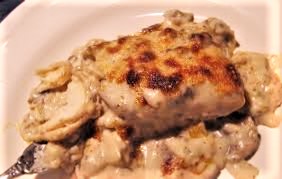
HALIBUT in CRABMEAT and MUSHROOM BECHAMEL


How about them photography skills ...

"The James Beard Cookbook," authored by the American chef and food authority James Beard, was published in 1959. It was revised and republished in 1970, and I am lucky enough to own one of the 1970 editions. James Beard brought French cooking to 1950's America. His legacy lives on in his numerous writings and cookbooks, and in the James Beard Foundation and its annual Beard awards. 


The jacket is long gone, but otherwise, the book is in very good condition.
It's nice to have one of his cookbooks around as a reference, and once in a while, I peruse its pages. Recently one of the recipes caught my attention: "fish in béchamel sauce." I decided to cook it, but I thought it would be an excellent idea to include mushrooms and crab meat in the béchamel!

Just a few minutes before sitting down to write this post I checked Beard's recipe once more. I noticed a "variations" section below the recipe in which Beard clearly states that both mushrooms and shellfish can be added to the béchamel. I had most likely read this ... Then forgot about it ... And claimed the idea as my own! Well, such are my adventures here in suburbia. Thrills and chills! Mushrooms and shellfish!  

Ingredients:


For the Béchamel sauce:
  • 5 tablespoons unsalted butter, at room temperature
  • 1/4 cup flour
  • 1 and 3/4 cups whole milk, warmed
  • 1/4 cup grated Parmesan
  • salt and pepper to taste
  • 1 teaspoon Dijon mustard
  • 2 tablespoons vegetable oil
  • 1/2 cup sliced mushrooms
  • 1/2 shallot, finely chopped
  • 1 tablespoon thyme leaves
  • 1/2 cup nice crab meat or you can even use shrimp
For the Halibut:

  • 1 bottle of fruity white wine
  • a few sprigs of parsley
  • a slice of lemon
  • a pinch of dried tarragon
  • 4 halibut fillets, about 1-inch thick
  • salt and pepper to taste
  • 2 tablespoons grated Parmesan cheese
  • 1 tablespoon unsalted butter, cut into small pieces
  • a few dashes of cayenne pepper

Directions:

Make the Béchamel sauce:
  • Saute the shallots in the vegetable oil until they become translucent. 
  • Add the mushrooms, the thyme, and some salt and pepper to taste. Cook until the mushrooms are soft and begin to give off their liquid. Set aside. 
  • In a 2-quart saucepan melt the butter over medium heat. 
  • Add the flour and whisk until smooth, but not browned.  
  • Gradually add the warm milk, whisking constantly to prevent lumps.  Simmer over medium heat, whisking constantly, until the sauce is thick and smooth, about 10 minutes. 
  • Remove the pan from the heat and stir in the Parmesan cheese, the Dijon mustard and some black pepper to taste.  
  • Add the crab meat and the mushrooms with their liquid and stir to combine.
For the halibut:
  • Preheat the broiler. Grease a baking dish that will comfortably fit the halibut and set it aside. 
  • In a large saucepan, add the wine, parsley, lemon, and tarragon, and bring to a boil over medium-high heat. 
  • Reduce the heat to a simmer and add the halibut. Cover the pan and poach until the halibut flesh is opaque, about 8 minutes. As you are cooking the fish, make sure the liquid doesn't come back to the boil. 
  • When the halibut has cooked use a spatula to carefully remove it from the saucepan and place it into the prepared baking dish. 
  • Season with salt and pepper.
  • Spoon the béchamel sauce over the fish and top with the Parmesan cheese.  
  • Dot with butter, sprinkle the cayenne over the sauce and broil until the sauce appears lightly golden, about 3 to 4 minutes. 

Thursday, 29 December 2011

STUFFED SQUID / KALAMARAKIA YEMISTA (Καλαμαρακια γεμιστα)


Kalamarakia Yemista is Greek for stuffed calamari.  Calamari is, of course, squid.  It’s my favourite thing to eat (my second favourite has got to be sushi)!  My last meal would include fried calamari, stuffed calamari, a variety of sushi, and a Diet Pepsi… Whoops… now I need some Diet Pepsi.  Excuse me while I visit the kitchen for a cold, bubbly glass of the stuff!  Be right back….

Here I am!  Did you miss me?  Anyway, I prefer a plate of calamari to a plate of roast beef the latter being what most people would like to order for their last meal. But I could be wrong. 

My favourite way of eating calamari is to have it breaded and fried.  Heaven! However, I prefer to have someone else fry them- like a cook at a restaurant- because I am not fond of the odour that tends to linger in the kitchen after having fried any type of seafood. Stuffing them is a nice way to cook them at home. Italians like to stuff their calamari with bread crumbs and herbs, while we Greeks prefer a stuffing made with rice and herbs. It’s all good.  

Kalamarakia yemista are usually eaten in the summer or at Lent time. I am making these in December, 29 December to be exact, because that’s my birthday, and I always have calamari to eat on my birthday. 

You’ll need to buy small, fresh squid as they are the most tender. Get mostly the mantle, or sack-like part of the squid, because that is a cavity, just right for stuffing. If tentacles are included with your purchase, chop them up very well and include them in the stuffing, or bake them along with the stuffed calamari by tucking them snugly into the same pan.  

On either side of the squid, attached to the bottom of the mantle, are small fins.  Those are easy to remove with a knife, and just like the tentacles, can be chopped up to be included in the stuffing.  Whatever you do, my advice is to make sure that you buy cleaned calamari. Cleaning them at home is a tedious and very messy job. I've watched people do it, and I've come to the conclusion that it's not for me. 
    
Most recipes for kalamarakia yemista are similar.  One interesting variation is the addition of raisins and pine nuts in the stuffing.  My version is simpler, so let's go to the kitchen and make stuffed squid (for my birthday!):


Ingredients:

1 pound cleaned baby squid
tentacles from the squid, some chopped into small pieces, some left whole 
1 onion finely chopped
2 cloves of garlic, finely chopped
3 scallions, white and pale green part, finely chopped
3/4 cup long-grain rice
1 cup chicken broth
3 tomatoes, skin and seeds removed and chopped well
Salt and pepper
3 tablespoons fresh parsley
2 tablespoons fresh dill
1 tablespoon fresh mint
1/2 cup tomato sauce
1 cup white wine
olive oil
pinch of thyme 
Toasted pine nuts (optional)


Directions:

  • Place the squid in a bowl and season with salt and pepper.  Pour 1/2 cup of the wine over them, drizzle with a bit of olive oil, and marinate in the refrigerator for about 1 hour.
  • In a medium skillet heat 3 or 4 tablespoons of olive oil and sauté the onions until they are soft.  Add the chopped up squid and cook for about 2 minutes.  Add the garlic and the rice and stir to coat with the olive oil.  Cook for about a minute, stirring.  
  • Add the scallions and 2 of the diced tomatoes.
  • Add the chicken broth, the rest of the wine and the marinade from the squid.
  • Season with salt and pepper and bring to a boil.  Cover and simmer on low until all the liquid is absorbed, about 20 minutes.
  • Let the rice cool slightly, then add the herbs and mix well.
  • Preheat the oven to 400° F. Prepare the baking pan:  Pour the tomato sauce and add the remaining diced tomato on the bottom of the pan.  Season with a little thyme.    
  • Stuff the squid with the rice mixture.  This is a job best done by using your hands.  Make sure the rice gets to the bottom of the squid cavity, and keep pressing the rice with your fingers so that the cavity is nicely filled  You may want to secure the top of each squid with a toothpick so that the rice does not spill during baking.  
  • Place the squid in the baking pan and roll it around in the tomato sauce. Add the tentacles if you have any left. Drizzle olive oil over the squid and bake it uncovered for 30 minutes.
  • Remove the squid from the oven.  Have a serving platter ready.  Spread some of the sauce from the squid on the platter.  Place the squid on top and spoon a little more sauce over them.  Sprinkle with the pinenuts if using, and serve.  


Sunday, 23 October 2011

CRAB AND SHRIMP CASSEROLE


Often, back in the days when I was a college student, I would come home from class and throw together a quick dinner made of rice, frozen vegetables, a can of tuna and a can of cream of mushroom soup. It was easy to make and (probably?) healthier than the usual student fare of pizza and diet soda. The recipe for my "tuna casserole," had come from a magazine advertisement for a famous brand of canned tuna fish. Just recently, I remembered those meals ... and I decided to revamp the recipe by throwing out the canned ingredients and replacing them with fresh ones. The result was really good.  My recipe contains long grain rice and crunchy wild rice cooked in broth. I have some sauteed vegetables, crab and shrimp, and a delicious homemade bechamel sauce that holds all the ingredients together. The dish is topped with panko breadcrumbs and then it goes into the oven. It comes out bubbly, and delicious. I am glad I revisited and revamped this recipe. It took two tries. Version one needed further tweaking, version two was spot on.  You'll see that I did not use any salt, and that's because I thought that the seafood was salty enough to flavour the whole dish. Here then is my recipe for shrimp and crab casserole:

Ingredients and Directions:

For the seafood:

1 pound of cooked crab meat
1 pound of medium shrimp, cooked only until they just turn pink
Juice of one medium lemon
  • Peel the shrimp and place it in a bowl along with the crab.  Sprinkle the lemon juice over the seafood and set aside. 
For the rice:

3/4 cup uncooked long grain white rice
1/4 cup uncooked wild rice
3 cups of vegetable broth
2 tablespoons chopped parsley
about 3 sprigs of thyme
1 bay leaf
dash of black pepper
2 tablespoons olive oil
  • In a medium-sized bring the broth to a boil and add all the ingredient. Bring back to the boil, lower the heat to simmer, cover the pot and let the rice cook until the liquid is absorbed but the rice is still moist. Remove the thyme sprigs and bay leaf and set the rice aside.
For the Vegetables:

3 tablespoons of olive oil
1 cup fresh or frozen corn kernels
1 medium or 1/2 of a large red sweet pepper, chopped
3 ribs of celery, chopped
1 shallot, chopped
2 scallions, sliced
4 mushrooms, sliced
  • Cook the corn and set aside.
  • Heat the olive oil in a skillet over medium heat. Add the celery, pepper, and shallots and cook until the vegetable begin to soften (about five minutes). 
  • Add the mushrooms and scallions and saute for three minutes.   
For the Bechamel Sauce:

2 tablespoons butter
3 tablespoons flour
2 cups of lukewarm milk
  • In a saucepan over medium heat melt the butter. 
  • Lower the heat and add the flour, mixing it with the butter.
  • Add the milk slowly, whisking constantly.
  • Keep whisking after the milk is added. Whisk well, until the sauce thickens and is ready to use. The sauce starts to thicken from the bottom of the pot where the heat is more intense, so make sure that you stir the thickened sauce from bottom to top in order to incorporate it well.
Now, preheat the oven to 350° F/180°C.

To assemble:

1 cup of panko breadcrumbs
1 or 2 tablespoons of butter, cut into small pieces
a few dashes of cayenne
black pepper to taste
  • In a baking dish large enough to hold all the ingredients fold everything together: the rice, the seafood, the vegetables, the bechamel sauce, and the black pepper. 
  • Smooth the top and cover it with the breadcrumbs.  
  • Sprinkle some paprika over the breadcrumbs and dot with butter.
  • Place in the oven and cook for twenty minutes until the top turns golden brown.
  • Serve right away! We had leftovers and the flavour was still great the next day. Enjoy!

Thursday, 25 August 2011

SHRIMP WITH RICE


 Here is one of my favourite recipes for shrimp and rice, easy to make any time. It's my idea of comfort food. Try it, it makes a great dinner! It has a nice mixture of vegetables, and the tomatoes and broth make the rice taste wonderful.  Peas are a nice addition here, and I usually include them, but this time we did without because I forgot to buy them. I think the best part about making this dish is having leftovers. They make an excellent non-liquid nightcap!


Ingredients:

1/2 cup olive oil
1 large onion, finely chopped
3 cloves garlic, finely chopped 
2 celery stalks, chopped
1 green pepper (or red if you like), finely chopped
1 cup of sliced mushrooms
1 cup frozen peas
1 1/2 cups long-grain rice
1 teaspoon salt
1 teaspoon black pepper
1 cup white wine 
3 cups hot vegetable broth
2 tablespoons chopped parsley
1 teaspoon fresh thyme leaves
1 small bay leaf
1 cup of tomato sauce
1 tomato, peeled, seeded and chopped.
2 pounds shrimp, peeled, deveined.

Directions:

  • In a large skillet heat the olive oil and add the onions, celery, and green pepper. Cook until the onions are soft, about ten minutes.
  • Add the rice and cook while stirring, until the rice turns golden in colour.
  • Add the garlic and stir for about a minute
  • Add the wine and the mushrooms, stir, and then simmer for five minutes.
  • Add the broth, tomato sauce, tomato, parsley, thyme and bay leaf. Cover and cook for about twenty minutes or until the rice is soft, stirring occasionally.
  • Add the shrimp and the peas. Simmer about 6 to 7 more minutes, until the shrimp are done.
  • Remove the bay leaf and serve.

Wednesday, 17 August 2011

BREADED PAN-FRIED HALIBUT


I'm almost embarrassed to post this recipe because it was so simple to make. I had purchased some halibut fillets wanting to cook them in a completely different manner, but my mother convinced me to pan fry them since that's her favourite way to eat fish. I didn't know how breaded pan-fried halibut would taste, and I was a bit nervous about the outcome.  I shouldn't have worried.  The fish came out delicious. 


  • The most important thing was to make sure the fillets were completely dry before being prepared for cooking.  So I washed them well and then patted them dry with paper towels.  
  • Next, I seasoned them with salt and pepper. 
  • I got the frying pan ready: a nice heavy one, large enough to accommodate the fillets and have room to spare. They should not be overcrowded while being cooked. I poured some good vegetable oil into the pan, enough so that it would reach about 1/4 up the sides of the halibut fillets. 
  • I prepared three bowls.  In one bowl I poured some flour.  In the another I beat an egg along with the juice of half a lemon. Then I chopped a large basil leaf and added it to the egg mixture. In a third bowl, I poured some panko breadcrumbs.  Panko is good to use here, because it doesn't absorb too much oil and because it stays crunchy after cooking.  
  • I waited for the oil to heat up in the pan and then I dipped each fillet first in the flour, then in the egg mixture and then in the breadcrumbs.  
  • As soon as each fillet was well coated on both sides, I placed it in the frying pan.  I cooked each side until it was browned, then I placed the halibut on a serving platter.
  • The last step was to sprinkle just a little lemon juice on each fillet. Yup, never forget the lemon juice. It's a Greek thing. Greeks are obsessed with lemons and lemon juice: good in savory foods good in desserts, makes one's hands really soft, deodorizes the kitchen, and I think sprinkling a little lemon juice on laundry will make it come out of the washing machine a lot cleaner... well, I haven't actually tried lemon juice on laundry, but who knows, there might be something to it.  
  • To keep things tidy while frying, I used the same hand to do the dipping in the flour, egg and breadcrumbs. I kept my other hand clean so I could use it to touch surfaces and utensils without leaving spots of batter all over them. That's a really neat trick!
  • The halibut came out moist, not greasy at all, and it made a great dinner. 


Friday, 8 July 2011

FILLET of COD en PAPILLOTE

Here's a recipe for fillet of fish en papillote that can be prepared both with salmon or cod. I happened to find some nice cod in the market, so cod it was. There just aren't enough good things I can say about this recipe.  The fish came out tasting incredibly delicious! This is a recipe by Dorie Greenspan that's meant to treasure and make again and again. 


En papillote is a method of cooking by wrapping food in parchment paper or aluminium foil. This method seals in the flavours during the cooking process and renders a more aromatic and tender product. That's exactly what happened here. The aroma of the cod was incredible and its texture was truly succulent.
 

I made two fish packets.  To start off, I washed the fish well and patted it dry. Then I placed it in a bowl and seasoned it with salt and pepper. I sprinkled the juice of one lemon over the fish and I let it absorb the lemon flavour while I continued my prep work. I made some tomato concassé, which is nothing else than diced tomatoes, peeled and with the seeds removed. I always do this when I cook with fresh tomatoes because I really dislike finding loose tomato skins or seeds in my food; they are tough and bitter, so out they go! I salted the tomatoes and sautéed them in some olive oil. Then I cut two large pieces of aluminium foil and placed them on the counter. After that, all that was left to do was a layering of ingredients. Some basil leaves went on the foil, then the fish, then the tomatoes then some lemon rind.

The layering continued with some chopped scallions, a couple of thinly cut lemon slices, a few dashes of olive oil, a bit more basil and a sprig of fresh thyme. I folded the foil over the fish and herbs, forming well-sealed packets. The fish cooked in a 400° F oven for about 12 minutes. 


I opened up the foil packets and a fragrant puff of steam rose up from them, catching me by surprise. But I soon breathed in the aroma of basil, thyme and lemon.  


The fish was plated and served right away. It was seasoned perfectly, and the en papillote method had ensured the cod came out very tender. 
How can I not cook this again?


Wednesday, 22 December 2010

SALT COD FRITTERS (BACCALA - BACALIAROS)


Salt cod is cod that has been preserved by a method of drying and salting. In its preserved state the fish can last for a few years. Production of salt cod dates back at least 500 years, to the time Europeans discovered the Grand Banks of Newfoundland. Due to abundant nutrients and ideal water temperatures, the Grand Banks were at one time the richest fishing grounds in the world. Today, sadly, the area has been overfished. Salt cod was a vital item of commerce between the New World and the Old. In the Mediterranean, it is a traditional ingredient in the cuisine of most countries.


Easy to find during Lent: salt cod for sale at the grocer. 
In Greece, salt cod is usually fried and served with an accompaniment of skordalia (a garlic dip). In my recipe, baking powder is added to the fish batter, something which makes the fritters fluffier and lighter.

March 25, which most often falls during Lent, is the celebration of the feast of the Annunciation.


      The Annunciation by Leonardo da Vinci can be seen at the Uffizi Gallery, Florence, Italy.  

For Greeks, this feast day coincides with Greek Independence Day. That's a big deal. Therefore,
the day is celebrated both with church services and with parades. 


March 25, Independence Day parade, Thessaloniki, Greece

When dinner time rolls around, it's very traditional to serve, among other types of seafood, salt cod and skordalia. There are various recipes for skordalia, and I have some posted on this blog. This last March 25, when I made salt cod fritters, I served them with a skordalia of potatoes, capers, and almonds. The whole meal was very enjoyable, very traditional and thanks to the skordalia, it was garlicky! Here's my version of salt cod fritters:

Ingredients:

2 pounds boneless, dry salted cod

3/4 cup of good quality beer. I use Heineken.
1 cup all-purpose flour
about 2 cups oil for frying
1 egg, beaten

1 teaspoon baking powder
ground black pepper to taste

Directions:
  • Rinse the excess salt from the cod. Desalinate that baby as much as possible: place it in a large bowl covering it with cold water by several inches. 
  • Soak, refrigerated, for 24 hours, changing the water every four hours. Drain.
  • Add the cod to a saucepan filled with eight cups of fresh cold water. Cook only until the water comes to a boil. Drain again and pat the cod dry with paper towels. 
  • Using your hands, shred the salt cod finely and place into a large bowl.
  • Mix the flour with the baking powder and black pepper. Add the paprika or cayenne pepper if using.
  • Pour the beer into a small bowl and slowly whisk in the flour, whisking until no lumps remain.
  • Stir the flour mixture into the shredded salt cod until well combined. 
  • Add the beaten egg and mix well.
  • Heat the oil in a large, deep skillet over medium-high heat. When the oil is hot, working in batches, use a spoon to mould the fish into a flat round shape about two inches in diameter. Flattening the fritters will help them cook more evenly. 
  • Carefully slip the fritters into the oil. Cook in batches: do not overcrowd the pan because the temperature of the oil will drop and the fritters will get soggy. 
  • Cook, turning once, until golden brown, about 6 minutes. Drain on paper towels.
  • Serve warm with caper and almond skordalia click here for that recipe).